Showing posts with label books. Show all posts

Tuesday, March 27, 2012

Food Ghostwriting


A couple of weeks ago Julia Moskin wrote a New York Times article exposing the fact that (gasp) not all chefs write their own cookbooks. Cookbook authors such as Rachael Ray and Gwyneth Paltrow were quick to point out that they did, in fact, compose their own material, and they felt maligned by the suggestion that they didn't. The controversy has led to plenty of earnest discussion about the role of ghostwriters in creating and producing cookbooks, with plenty of focus--as usual--on high profile celebrities with big names and big egos.

This past winter I've been doing a bit of cookbook ghostwriting myself. I'm finding I really enjoy the process of helping other people to channel their food knowledge into written form. I love writing but I can't really market my way out of a paper bag, so ghostwriting feels like a perfect fit: I get to focus on the part that I do well, and another person has the job of promoting the material. I started out as a fiction writer, and ghostwriting also enables me to go back to chameleon mode, learning and imitating someone else's voice.

I've been working for peanuts so far, thinking of the process as an internship of sorts. If I get some experience, then down the line I may be able to work on more lucrative projects because, after all, a girl's got to earn a living. But reading Moskin's account of the treatment she received from some of the big names she worked with has given me a new appreciation of the type of work I've been doing.

I've mostly been helping non-native speakers express their food knowledge in ways that will be accessible to an American audience. I edited a cookbook for a Russian guy with a thick accent who had been working with voice recognition software: this became clear when I came across the phrase "feel the pastry shells." I worked with a Greek food personality who wants to teach American cooks about the food lessons that he and his compatriots have learned as a result of their country's economic turmoil.

I'm finding this work fascinating. In addition to learning a lot about unfamiliar cuisines, it's gotten me thinking about the role of food writing in the digital age. We all want to promote who we are and what we know. We create platforms, project personalities, and build audiences. But the people with the deepest, broadest food knowledge aren't necessarily the ones who have the writing skills or the tech savvy to communicate what they know.

There's been a lot of talk lately about the ways that new information technologies have been lowering the qualty of food writing and diluting the brands of folks who immerse themselves in the craft and the business of creating food books and magazines. But digital media and the recent innovations in self-publishing have also created a field that is potentially quite egalitarian and food is, after all, a deeply egalitarian medium.

By the way, if you're ever looking for a ghostwriter, I hope you'll keep me in mind...

Tuesday, August 2, 2011

It's a Book!


It's called Cavemen, Monks and Slow Food: A History of Eating Well, and it's about our ever changing relationship with the food we eat. I was talking to someone at some point during the writing process, and she said that she'd never been particularly interested in history because it was all about wars. I disagreed. Personally, I grew interested in history when I realized that it was actually all about food.


We first became human when changes to our teeth and legs enabled us to hunt, gather and eat a more interesting diet than our simian ancestors had enjoyed. Civilization and farming evolved hand in hand, and more recently the industrial and technological revolutions both hinged on having an ample food supply.


As a farmers' market vendor, I was especially fascinated to learn about the many important social and political developments that occurred when small-scale agriculture managed to thrive. Ancient Greek democracy emerged among independent olive and grape growers, and the bleak years of medieval feudalism drew to a close when enterprising farmers began clearing and claiming marginal land, and striking out on their own.


But there are already plenty of terrific food history books out there telling you how we came to eat what we eat. I was more interested in exploring how we came to enjoy the foods that we prefer, and how longstanding attitudes and feelings about food tie into today's issues and debates, such as organic foods, local eating, vegetarianism, and whether foodies are inevitably snobbish.


Copies are available on Amazon, and I'm working hard to get it into bookstores and libraries. In the meantime, I'll be blogging more regularly about the long view. Thanks for listening.

Tuesday, June 7, 2011

Zola's "Belly of Paris"


I knew I was going to enjoy this book from the very first page, as Zola describes the wagons pulling into the Les Halles market one morning during the mid 1800s. Vendors are paying for stall space, quibbling over placement, and getting in each other's way. One of my favorite things about my own market experience is the connection I feel to the countless farmers and vendors who have parked their wares in public places since the very beginning of civilization.


My attention began to wander during one of the early scenes as the protagonist Florent takes off to explore the market with his new friend Claude, who is based on the painter Paul Cezanne. Through a long, drawn out section, Claude repeatedly exclaims about the colors of the light on the vegetables as the sun rises over the market. Though the account probably should have been about half as long, it did call to mind the folks with cameras who I see daily at Seattle markets, angling to catch the produce in the best possible light.


Later in the book, I grasped what Zola was trying to accomplish in that too long section, as he waxes poetic describing cheeses and fruits:


"There, next to the one-pound stacks of butter, a gigantic Cantal was spread on leaves of white beet, as though split by blows from an axe; then came a golden Chesire cheese, a Gruyere like a wheel fallen from some barbarian chariot, some Dutch cheese suggesting decapitated heads smeared in dried blood...a parmesan adding its aromatic tang to the thick, dull smell of the others."


And:


"The cherries, arranged in rows, were like the lips of Chinese girls drawn into a tight smile: the Montmerencies suggesting the fleshy lips of fat women; the English ones, much longer and more serious; the common black ones, which looked as if they had been bruised by kisses; the bigaroons, speckled with pink and white, which seemed to be smiling with a mixture of merriment and anger."


Like Claude the painter, Zola was painting his market with words. He clearly knew the venue as intimately as any modern day vendor, describing the subterranean caverns dense with livestock and the vats of culturing milk, the vendor rivalries and the neighborhood gossip who showed up late each day trying to get something for nothing. I know each of these characters, or at least modern day versions of them.


Zola's genius as a writer lies in his profound understanding of working people. He manages to paint them with an eye that is at once sympathetic and critical. I can't think of a more fitting subject for his talents than a bustling market with its day to day dramas. This is certainly a gloomy book, focusing on the dark side of interpersonal relationships. And yet the story unfolds amidst the heart and soul of one of the most vibrant food cultures the world has ever known. If only for that reason, I found it strangely uplifting.


Thursday, February 3, 2011

Book Miles


I'm thrilled to have just signed on to print some actual copies of Cavemen, Monks and Slow Food: A History of Eating Well on the Espresso book machine at Third Place Books, one of my all time favorite bookstores.

Here's how it works: they do design and layout for a very fair fee, and then they print copies of the book on demand. There's no minimum order, in fact, there isn't even a price break for ordering in quantity because they'd rather maintain an ongoing working relationship than have you order too many books and then never come back. I love this kind of business model.

I've published two books with conventional publishers. One is in Tennessee, and they have the books printed in Canada. The other is in California, and they have them printed in China. When I order copies of either book, they also have to be shipped from the publisher in Tennessee or California to my doorstep in Seattle.

This press is six miles from my house. It's part of a commons where I can also shop for books, visit the library and get a cup of coffee while I pick up my books. As someone who is passionate about building local economies, I find this pretty exciting.

Sunday, January 2, 2011

Cavemen, Monks and Slow Food

I've published my opus on Kindle. It's called Cavemen, Monks and Slow Food: A History of Eating Well, and it tells the story of our perpetually unfolding relationship with food, from the time we first started walking upright to the modern sustainable food movement.

Eating well means many things to many people. It can be a spiritual pursuit, as with Hindu vegetarianism and kashrut. It is also a social marker: think medieval banquets and four-star restaurants. Dietary prescriptions for eating well address health concerns, such as heart disease and diabetes.


A steak is never just a steak and a piece of bread is never just a piece of bread. Whether or not we are consciously aware of these countless layers of meaning, the allure of steak is subtly colored by the magic of the Paleolithic hunt, and the comfort of bread is inseparable from its long history as a vital staple.


Our food culture has evolved in tandem with our communication technologies. It is quite likely that we developed spoken language as a tool to organize hunts, and the earliest written documents in ancient Babylon and Egypt are contemporaneous with some of the earliest sophisticated cooking techniques. The invention of the printing press led to a proliferation of cookbooks, and today the internet puts worlds of recipes at our fingertips.


Grand cuisines require grand culinary infrastructures, but small-scale agriculture is necessary for a broad base of people to eat well. Olive and grape farmers in ancient Greece developed perhaps the first formal democracy, and modern independent farmers are creating life affirming alternatives to the industrial food behemoth.


I'm fascinated by these stories about ideas, recipes and technologies. I'm also intrigued by the possibility that a deeper understanding of our food history can help us to see past some of the blind spots that interfere with our daily ablility to make solid choices about how to eat.


So the book is available on Kindle. It's $3.99, which is cheaper than a quesadilla. If you have an Ipad with a Kindle ap, you can get it that way. I'm looking into making it available in other platforms as well, but I'm a bit of a Luddite so it'll be a process. If you're interested in reading it and you don't have the right technology, please email me and I'll get you a copy. Ebook marketing is the wild west at this point. But that's another story.

Tuesday, December 21, 2010

The Meat Lover's Meatless Cookbook

I first crossed paths with Kim O'Donnel soon after she moved for Seattle, when she was writing for the Washington Post. She ordered a quesadilla at a farmers' market, regretted it when she saw that it had beets, enjoyed it anyway, and wrote a post about the experience for her Mighty Appetite blog. I became her symbol of the fact that beets weren't that terrible after all and she became my high-profile-reformed-beet-hater poster child.

Kim has been instrumental in popularizing the Meatless Monday movement, a campaign to accesibly promote plant based eating to folks who wouldn't be caught dead calling themselves vegetarian. When I heard that she was working on a meatless cookbook targeted towards meat eaters I mentioned that I struggle daily at my market booth with prejudices against meatless food. She responded that the solution was simply to make the meatless food tasty enough that even meat eaters could enjoy it.

I wasn't convinced. If it were that simple then I wouldn't keep encountering those market shoppers who feel the need to exclaim every time they walk past my booth, "I'm a carnivore!" Meat eating has countless layers of meaning. Its appeal is not simply a matter of flavor.

The Meat Lover's Meatless Cookbook approaches the issue brilliantly, by blatantly celebrating the joys of eating meat while simultaneously offering an alternative. The introduction has a wonderful baby picture of the author covered in grease and enjoying a t-bone. For all practical purposes, she's winking at the reader and saying, "This is great stuff. Now let's move on. At least one day a week."

Oh, and the recipes are fabulous too.


Saturday, June 26, 2010

Foodies: The Book


  1. Okay, it's definitely not a conventional page turner, but I was fascinated by this rather academic analysis of sociological trends at play in today's world of food aficionados.

The book's subtitle is "Democracy and Distinction in the Gourmet Foodscape", and it describes the tension between our egalitarian inclination to enjoy all types of foods, from burgers to truffles, and our relentless pursuit of authentic and exotic foods. These two tendencies play off of each other in complex and perplexing ways, like relentless pursuit of high quality simple staples and appreciation for cheap street food that you can only experience with an expensive plane ticket.

Johnston and Baumann also point out contradictions and blind spots such as the emphasis on eco friendly foods but overall lack of awareness regarding social justice issues in the food industry, and the shared conviction that we can purchase our way towards a more just and sustainable foodscape.

I would have liked to see more discussion of one of my pet topics--attitudes towards meat consumption--which happens to provide fertile illustrations of many of the book's main ideas. Sustainable meat has been eagerly embraced by the foodie community, with good reason. But there's been very little reflection over the fact that its price is too high for most people to enjoy it regularly and even if it could become a mainstream staple, it still wouldn't be sustainable for everyone to eat a lot of it every day.

I doubt that a book like this will do much to raise awareness within foodie communities about these issues. Still, I'm glad someone is thinking about them.

Thursday, May 6, 2010

The Northwest Vegetarian Cookbook


I first met Debra Daniels-Zeller when I was regularly catering monthly dinners for the Vegetarians of Washington. She was the guest chef, and I was the "ghost chef". I'd work with chefs the organization wanted to feature, collaborating to develop menus and then executing the recipes myself because I had a commercial kitchen and catering gear.

It was sometimes a tricky job. The guest chefs wanted to show themselves off while I wanted, first and foremost, to earn enough money to make the endeavor worthwhile. I learned a lot about putting my ego aside.

When I first learned I'd be working with Debra, I went to a bookstore to check out her book, and promptly bought a copy. It was a lovely, self-published volume filled with enticing recipes as well as profiles of some of my favorite farms. By the time we touched base and began discussing recipes, I had already picked out a menu, which turned out to be very similar to the one that she had in mind.

We've crossed paths regularly since then, since we both frequent local farmers' markets. Getting to know her better I discovered that the original decision to self-publish her book was actually very much in line with her ideal of supporting local businesses and maintaining short supply chains in every possible way. I'd never seen anyone promote a self-published book as thoroughly or as conscientiously and I was continually impressed, though I also wished I could see the book receive the benefit of a publisher's established distribution channels.

The Northwest Vegetarian Cookbook, which came out just this week, is an updated version of the original volume, with new insights and recipes, and an expanded reach, profiling farms in Oregon as well as Washington. It's a beautiful book. I rarely cook from recipes, but I'll definitely be trying some of these, such as the Potato, Fennel and Tomato Soup, and the Orzo with Shallots, Kale and Walnuts.

Congratulations Debra!

Friday, February 12, 2010

The Butcher and the Vegetarian


I had a lot of fun with this book. As a somewhat ambivalent meat eater and a foodie who struggles with the question of how I can enjoy the world of food to the fullest without genuinely loving to eat meat, it was a pleasure to read the story of someone in a similar predicament.

Like TAW, I've been learning to cook meat as someone with considerable experience in vegetarian cooking. I'm a bit squeamish sometimes, and also deeply satisfied when I do manage to get it right. Like her, I also feel a bit like a space alien as I watch the strong emotions meat evokes in people.

Because this is a book about a subject that strikes so close to home for me, it was inevitable for me to feel a bit dissatisfied when it didn't give the same weight to aspects of the issue that stand out most dramatically for me. There was only a sentence or two about the relationship between meat and class, or the fact that people with wealth and power have traditionally eaten lots of meat while, until relatively recently, most other people couldn't afford to eat meat on a daily basis. That's changed with the advent of industrial meat production, but it was with us for so long--perhaps from Paleolithic times, even--that it's still with us in force, in the strong emotions that meat evokes, which this book describes so extensively.

There's been an interesting twist to this dynamic lately, as nearly everyone can afford $1 meat-based meals at McDonald's, but affluent people have been instead choosing organic and sustainable meat on a more limited basis. I've spent many years listening to people's comments at the farmers' markets about the fact that my booth doesn't offer any meat. The people who are most contemptuous usually seem the most out of place among the relatively affluent, educated farmers' market clientele. I wrote in my last post about the only time I'd ever seen a farmers' market vendor robbed. The guy who robbed her had been at my booth earlier in the day asking about my food, and said, "I can't eat that. I've got to have meat."

Speaking of meat, I had a success story the other day. I got some stir fry meat from Skagit River Ranch, which is sliced extremely thin. I haven't had much success with it in stir fries because the pieces are too long, but I made gyros sandwiches that filled me with joy. I marinated the pieces in olive oil, lemon and salt, then I cooked them hot and fast, and put them on fluffy Greek pita with lettuce and yogurt sauce. Yum. I used less than 8 ounces of beef, fed 3 people, and made us all very happy.

Sunday, February 7, 2010

Food Miles


I haven't read James McWilliams' book Just Food: Where Locavores Get It Wrong and How We Can Truly Eat Responsibly. But I've read enough similar reviews to think I've got the idea: McWilliams argues that the concept of food miles only accounts for one small aspect of the total energy cost of producing food. McWilliams is the guy who wrote the New York Times editorial in August 2007 citing the New Zealand study that demonstrated that lamb raised in New Zealand and then shipped to England actually has a lower carbon footprint than lamb raised in England because the climate in New Zealand is more suitable for raising lamb.

Apparently McWilliams also has a good time making fun of the locavores who drive to the farmers' market to save the emissions that are spewed shipping food from distant regions. I've heard several references to McWilliams' book during the past few days, and it's gotten me thinking that we earnest would-be locavores can't keep glossing over this very real question of whether local eating really is more sustainable when industrial agriculture has its own energy efficiencies.

I do think that all of our deeply held beliefs, from religious convictions to political stances, are primarily emotional rather than rational in orgin. That's why it's so hard to change someone's mind through rational argument and so easy to manipulate opinions emotionally. The big picture as far as sustainability and food miles is probably too complex for any of us to understand comprehensively so we focus on isolated facts that support the positions we already hold, like the statistic that a lettuce grown in California and shipped to New York uses more calories in transport fuel than it provides in food energy, or the New Zealand study comparing the carbon footprints of New Zealand and English lamb.

I eat as much locally produced food as I can because I want to live in the kind of world where small-scale farmers can earn a living, where an honest, creative food culture has an opportunity to thrive. There is a consistent historical correlation between small scale farming and broad-based land ownership, democracy and humanist ideals. The democracy in Ancient Greece was cultivated by small-scale farmers and the shift from feudal manors to private land ownership helped to show Europe out of the dark ages. Thomas Jefferson's revolutionary democratic ideal was a nation of independent farmers, and after the Civil War freed slaves were supposed to get "forty acres and a mule," or a piece of land that was synonymous with freedom.

At the Ballard Farmers' Market today a guy bought a quesadilla from me. I was standing by the stove, about five feet from my cash box. He gestured to the cash box and said, "You'd better get that off the counter. Someone's going to steal it." He spoke with a thick New York accent. (One of my people.) In thirteen years of vending at farmers' markets, I've only seen one person try to steal a vendor's till, and he only got about ten feet before a bunch of customer's tackled him.

That's why I eat local food.

Monday, January 18, 2010

My Brazilian Cookbook


I picked up a wonderful Brasilian cookbook when I visited Belem earlier this month. The process of choosing it was a bit of a feat: all of the books at the bookstore were wrapped in plastic and the shelves were so narrow that if you removed two books, all the others fell on the floor. (Mortification is the same in any language.) The sales clerk saw that I was looking at cookbooks and began unwrapping them and bringing them to me. I was torn between "Dona Benta Comer Bem," and this one, which I eventually chose. I picked this one because Dona Benta promised international recipes, among other things, and I already have more than enough international recipes. I wanted a Brazilian focus.

When I brought it home and started looking through it, I found that I was having considerably more difficulty than I anticipated understanding the recipes. My Portuguese vocabulary contains a disproportionate number of food words. Nonetheless, even with the help of my small Portuguese-English dictionary, I realized that this was going to be a bit of a feat. For one thing, many of the ingredients aren't even available here, such as jambu, the spindly Amazonian green that numbs your tongue. Also, many of the words are used idiomatically, in food-specific ways. My favorite example is a "dende de alho," which literally translates as a "tooth of garlic," which we refer to as a "clove." (Also idiomatic, if you think about it.)

I'm going to work my way through it, because I really want to cook this food. My sweetie hates translating, but she's going to have to rise to the occasion sometimes if she wants to enjoy any of this wonderful cuisine at home. All in all, the experience has gotten me thinking about how useful it would be to have culinary specific cross cultural dictionaries, with food names, idioms, and linguistic conventions that appear in recipes. A limited market, to be sure, but a passionate one.

Saturday, August 1, 2009

The Chocolate Connoisseur


  1. This week I read through this lovely little book by Chloe Doutre-Roussel, who I've heard referred to on various occasions as the world's foremost expert on chocolate. She eats a pound a day--only the good stuff--but saves the early morning hours for tasting new, unfamiliar varieties, so she can do so before her taste buds have been clouded by other flavors.

As something of a culinary populist, I had to get past the word "connoisseur" in the title. I'm probably not going to change my chocolate tasting habits and follow the procedures outlined in the book, but I have to admit that I was pleased to learn that she highly recommends my all time favorite variety, Michel Cluizel's Mangaro.

Despite whatever ambivalence I may have had about the idea of learning to be an "expert," as someone who dearly loves chocolate, I found it delightful to read through several hundred pages written by someone who's dedicated her life to this wonderful food.

Saturday, July 18, 2009

An Edible History of Humanity


I'm always excited to see a new book about the role of food in history. It's a fertile and fascinating topic that has been largely unexplored until relatively recently.

There are so many ways to approach this subject, so many insights and stories waiting to be woven together. Tom Standage's "An Edible History of Humanity" did, in fact, introduce me to some episodes that I haven't seen addressed in any other history of humans and food, such as the role that food provisioning has played in different wars, and the devastating famines in the Soviet Union and China during the mid twentieth century, brought about largely by the respective governments' policies aimed at convincing the rest of the world that they actually had a surplus of grain.

But Standage devotes a considerable amount of space to praising the "green revolution," the development and widespread use of nitrogen-based fertilizer and the use of hybrid seed varieties that have dramatically increased agricultural productivity during the past century, while relying disproportionately on nonrenewable energy sources and wrecking longstanding traditions in many parts of the world.

He makes the fascinating point that industrialization has almost always followed on the heels of a period of accelerated agricultural activity: in order to develop an economy where most people work at endeavors other than farming, a society first needs to figure out a way to feed more bodies with fewer people actually working the land.

Although he acknowledges that there have been drawbacks to the industrial agricultural practices that have gone hand in hand with modernization, and he assures the reader that organic agriculture will have to play a role in the next green revolution, his biases are clear simply by virtue of the amount of space he devotes to marvelling at the amazing productivity of modern agricultural technology. As someone who questions the virtues of unfettered industrialization, I was less than convinced, though I still thought it was a pretty good read.

Wednesday, June 17, 2009

Catching Fire: How Cooking Made us Human


As an unabashed food history nerd I was excited to hear about this new book, which makes the argument that the domestication of fire was the impetus behind many important evolutionary developments.

We have evidence of the widespread use of fire by humans starting about half a million years ago, but Wrangham argues that it must have started much earlier than that, based on the fact that human stomachs and teeth began shrinking between a million and a half and two million years ago, evidence that human diets became softer and easier to digest.

I was fascinated by his discussion of how long our simian cousins spend chewing: some as much as six hours a day. This amount of processing is necessary in order to break down the tough, raw foods available in jungles and savannahs into useful nutrients. The act of cooking dramatically lessened the amount of time we had to spend chewing, freeing us up for all kinds of other activities, like music, hunting and philosophy.

I did have trouble with his discussion of cooking and gender roles. I've never heard a satisfactory explanation of the almost universal division of labor that delegates cooking to women and hunting to men: it seems nearly impossible to me to come up with a satisfactory hypothesis when we're filtering information through our own experience and social conventions. But Wrangham's theory seemed especially silly: he believes that women were particularly vulnerable while they were cooking, so they needed men to protect them. Hence the development of human pair bonding.

I think it's more likely that the men were being annoying and getting in the way, and the women sent them out to hunt, knowing the activity would get them out of the homestead for an extended period of time.

Tuesday, June 16, 2009

The Bellevue Farmers Market Cookbook


The wonderful folks at the Bellevue Farmers' Market gave each of the vendors a copy of their cookbook a few weeks back. I was impressed. It has some truly appealing recipes, like Apricot Cheesecake, and Risotto with Spinach and Wild Mushrooms, as well as background and history about the market, and vendor profiles.

There are so many ways to organize a cookbook about local foods. My own cookbook consists of seasonal recipes using fruits and vegetables that grow in most temperate climates. My friend Debra Daniels-Zeller's forthcoming book showcases farms from all over the Pacific Northwest. The Bellevue Farmers' Market Cookbook has a narrower focus--the produce and farmers from one particular market--but it turns into a lens for something much broader, tying together the many elements that go into creating a successful market, and celebrating the entire package.

Tuesday, June 2, 2009

A Nation of Farmers


  1. I was curious about Sharon Astyk and Aaron Newton's new book A Nation of Farmers because my recent foray into the world of gardening has left me curious about the potential of many small-scale efforts like my own to change the way we eat.

According to these folks, a revolution in the way we grow and source our food is not only possible, but downright necessary. The limited supply of oil, growing global population, and ailing economy are all pushing us towards a new--or old--approach to food production, one which relies less on fossil fuels and more on human energy.

Foot for foot organic, small-scale agriculture is considerably more productive than farming large tracts of land using energy intensive machinery. And there is plenty of unused land available, from city lots to suburban lawns. Newton and Astyk make a compelling case for each and every one of us getting out there, digging some ground, and building skills that will serve us well in the future.

Having just read Joel Berg's How Hungry is America, I repeatedly found myself internally objecting that spare ground for gardening is a middle class luxury, and many people don't have the time and space to make it happen. The authors acknowledge this, at the same time that they reference all the successful projects in recent years bringing urban farming to poor inner city neighborhoods. Both perspectives need to be heard: it's not easy to grow food if you don't have the resources, but disadvantaged people have been contributing to meeting their own basic needs by growing their own food for as long as there have been inequities in social status and income level.

Friday, April 24, 2009

The Small-Mart Revolution


This week I read Michael Shuman's book, The Small-Mart Revolution, about the nuts and bolts of building local economies. I recommend it, despite his predilection for overusing cutesy phrases and acronyms (including "Small Mart".) I've long been passionate about local foods, but this book helped fill in many of the gaps in my understanding of how local purchasing helps to build healthy communities. I was especially interested in his emphasis on banking locally: it had never occurred to me that depositing money at a bank that's based in another city sucks funds out of my own region.

Thursday, April 2, 2009

Beans: A History


I just read Ken Albala's book, Beans: A History. It was a timely read for me because I've been thinking a lot about the relative value we attach to certain foods, and lamenting the fact that we'd have fewer food security issues if we could only learn to use and appreciate more of what's available.

Beans have traditionally been thought of as "poor man's meat" because they offer an alternative source of protein for folks who can't afford to eat meat regularly. They have a long shelf life and they're relatively inexpensive to produce, but unfortunately these qualities make them less valued in class conscious societies where resource-intensive foods are typically thought of as status symbols.

Tuesday, March 17, 2009

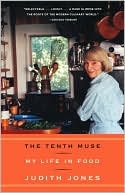
The Tenth Muse

  1. I recently read the memoir The Tenth Muse: My Life in Food, by Judith Jones, the Knopf editor who discovered Julia Child, among others. It was a good read, and gave an inside picture of what it was like to put together a cookbook in the days before the modern food revolution.

Having worked on several cookbooks, I was amazed at how different the process is today, in an age of email attachments and celebrity chefs. Jones would visit her authors regularly and even cook with them in an effort to capture and put their techniques onto the written page. The editors I've worked with have always been supportive, useful and friendly, but we've never collaborated with the kind of intensity Jones describes.

But that was a very different time. Jones was passionate about food herself, and avidly sought cooks who could help her stir a similar enthusiasm in an audience that was just awakening to the world of culinary possibilities. I'm glad I came of age during a time when the food world had so much to offer, but this book made me a bit sad that I missed out on this time when each new innovation merited such a high quality of individual attention.

Tuesday, March 10, 2009

Mindless Eating


I just finished Brian Wansink's book, Mindless Eating: Why We Eat More Than We Think. I'd been hearing about his work for years. He's the food researcher who does experiments comparing how much people eat with different serving sizes, different background stimuli, and different kind of feedback telling them how much they've eaten.

According to Wansink, nobody--not even food researchers--are immune to these cues that affect how much we eat, though nearly everyone thinks they are. Reading this has definitely gotten me to pay more attention, trying to put less on my plate and resisting the urge to help myself to seconds.

But I have to say, reading a book about snacking definitely got me thinking quite a bit about...well...snacking.